

EN:LAB – innovation, research and sharing in a single building.


Inaugurated on 24 June 2024, the EN:lab building represents a real innovation in research. The result of an integrated vision of workspaces, research and sharing, it is the first building-laboratory designed with innovative solutions for efficient and integrated energy management.

The peculiarity of EN:lab is to combine in a single building:
- a “laboratory” for efficient and integrated energy management;
- experimental laboratories on frontier issues, which broaden the research context of the Politecnico di Milano;
- spaces for sharing knowledge and dissemination, intended for events open to citizens, meetings between researchers, and advanced and innovative teaching.


A building with efficient energy generation
The building is a concrete example of how technological innovation can be integrated with energy efficiency, thanks to the large photovoltaic production area it has. EN:lab consists of 300 monocrystalline silicon modules for a peak power of over 1000 kW. The thermal and cooling energy for air conditioning is provided by two high-performance air-cooled reversible heat pumps with low environmental impact, with provision for connection to the future district heating network of the Campus. There are no combustion systems, so it is zero direct emissions.
An efficient building: active and responsive facades
Thanks to the glass surfaces that make up the building, energy requirements are minimized. This feature, in addition to allowing maximum thermal/acoustic insulation and maximum passive protection from solar radiation, forms the basis of an “active and responsive” management system. In fact, 70 sensor kits have been installed whose data are processed through algorithms that activate integrated technologies, in order to optimize the performance of the envelope and systems in real time, creating the best conditions in indoor environments for energy efficiency and for people’s comfort and well-being.


The spaces in EN:lab
The building is largely dedicated to experimental laboratories on frontier topics, such as nanomaterials, electrochemical batteries, fuel cells and electrolysers, and electrical devices for smart grids. In addition to the laboratories, the interior of EN:lab houses a conference room with 150 seats, two multifunctional rooms intended for dissemination and innovative teaching, meeting rooms and offices.
There are seven laboratories that will populate EN:lab:
- NanoLab – Micro and nanostructured materials, which will host advanced instrumentation dedicated to the fabrication and characterization of materials and surfaces at the nanoscale, in order to study the relationship between the structure and functional properties of materials.
- R-SET LAB – Research for a Sustainable Energy Transition, is dedicated to the experimental study and development of Power Electronics systems for Generation, Electrochemical Storage, Power Quality, Custom Power and Load Management, both for specific industrial applications and for use in LV distribution networks such as Smart and Micro Grid.
- M2EPS – Measurement lab for electrical systems, the laboratory dedicated to the characterization of materials, non-invasive diagnostics and monitoring of electrical power components and systems.
- PEEMS – Power Electronics, Electric Mobility and Safety, a multi-disciplinary laboratory that will aim to carry out research activities in the field of electrical power systems.
- Battery Materials Engineering Laboratory, which will house equipment for: fabrication of materials and electrodes for batteries, their characterization and electrochemical and spectro-electrochemical study, assembly and testing of cells.
- Pro-e- Storage Lab, an interdepartmental laboratory for the prototyping of innovative solutions for polymer fuel cells, electrolyzers, flow batteries, lithium-ion batteries. The 5 Departments involved are: Energy; Mechanics; Chemistry, Materials and Chemical Engineering “Giulio Natta”; Electronics, Information and Bioengineering; Aerospace Science and Technology.
MRT Fuel Cell and Battery Lab, dedicated to the development of electrochemical devices for energy conversion.
Related stories

Solar energy and desalination: DESOLINATION’s sustainable challenge
Engineering, chemistry, diplomacy, and project management.

The history of hydraulics begins at the Fantoli Laboratory
A voyage into Historical Archives of Politecnico di Milano

Sustainable technology against deforestation in Madagascar
Alternative supply chain transforming organic waste into solid fuels to replace conventional ones

How kites and drones can revolutionise wind energy
Discovering the new frontier of renewables
You might also like

Where Engineering Meets the Brain
Between neural models and precision medicine, Alberto Antonietti works to better understand neurological diseases.
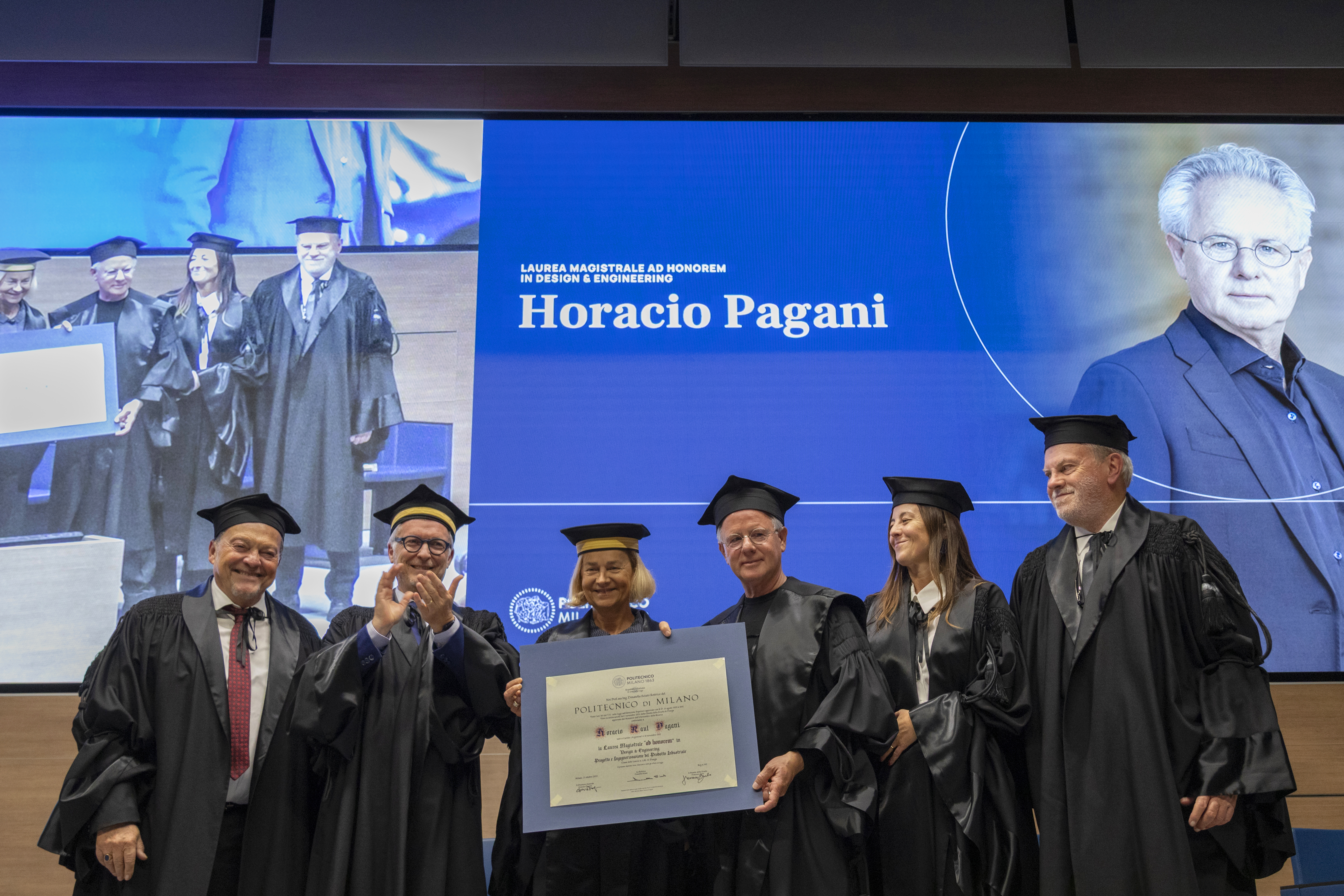
Art, science and technology in the unique design of Horacio Pagani’s hypercars
A close-up with the Italian-Argentinian entrepreneur, founder of Pagani Automobili, who revolutionised the automotive sector with his talent

BAMBI: when research meets life
A safe, accessible, and easy-to-use device to counter postpartum haemorrhage.

Rediscovered time, rediscovered neighborhoods: smart working redesigns Milan and Europe
Ilaria Mariotti discusses the new geography of work, including urban scenarios, territorial policies, and new inequalities.

Human Creativity and Generative Artificial Intelligence. How Imagination and Algorithms Come Together.
When imagination becomes a hybrid process, between prompts, the model's "personality" and critical thinking.