

Inside the Marco Garetti Laboratory, where technology and humans meet


The Marco Garetti Laboratory is in the Department of Management, Economics and Industrial Engineering at the Politecnico di Milano, and entering it is like stepping across a symbolic threshold: one that separates the traditional concept of the factory from a reality in which technology, industrial processes and people are all inseparable. Where there was once a bar, there is now a “miniature” factory, designed not to produce, but to observe, simulate, and experiment. Professor Sergio Terzi, the scientific director of the Lab, explained a context that involves Industry 4.0, Cognitive Ergonomics, and collaborative robots and which, above all, puts human beings at the centre of this digital world.
How it started
The Marco Garetti Lab was not the result of a top-down plan, but rather developed from the practical need for a research facility. As Prof. Terzi explained: “This has already been in existence for several years. There was once a bar on this site. Then we [the research team known as the Manufacturing Group of the Department], slowly changed it into a laboratory, which we called the Industry 4.0 Lab.” This was the time when Italy was also starting to discuss the fourth industrial revolution, and we wanted to create a demo centre: a place for displaying technologies that normally remain invisible, such as the software used for production control, process simulation, and data collection and analysis.
The lab was designed to be a Teaching Factory, right from the start. As Prof. Terzi explained: “It still remains a mini factory, one not used for production, but rather as a demonstration space to practise simulations and apply algorithms in a setting that resembles a real one.”
The name is not accidental. The Laboratory is dedicated to Prof. Marco Garetti, Full Professor of Industrial Technologies, who died in 2016 and was the founder of the research group. As Prof. Terzi recalled: “He was our professor, we grew up with him. He created our group and he always worked in the industrial sector, combining information technology, automation and production processes. It was important to us that this lab should bear his name.”
The mission today
The Laboratory has reinvented itself in recent years. The turning point was a meeting with the “HumanTech – Humans and Technology” project, funded by the Ministry of University and Research as part of the “Departments of Excellence 2023-27” initiative, which Prof. Terzi has taken part in right from the start. The basic aim is clear: to investigate the role of the human being in digital systems. In the case of the Marco Garetti Laboratory, this means regarding the factory as an ecosystem in which advanced technologies and operators coexist and interact.
As Prof Terzi explained: “We have combined the idea of Industry 4.0 with what is known in scientific terminology as Cognitive Ergonomics. So, this is not only about automation and software, but also looks at the stress, tiredness, distraction and cognitive load of human beings. A factory that is progressively more digital needs operators who are ever more closely involved, and the lab is a place to study this relationship before the factory starts production.
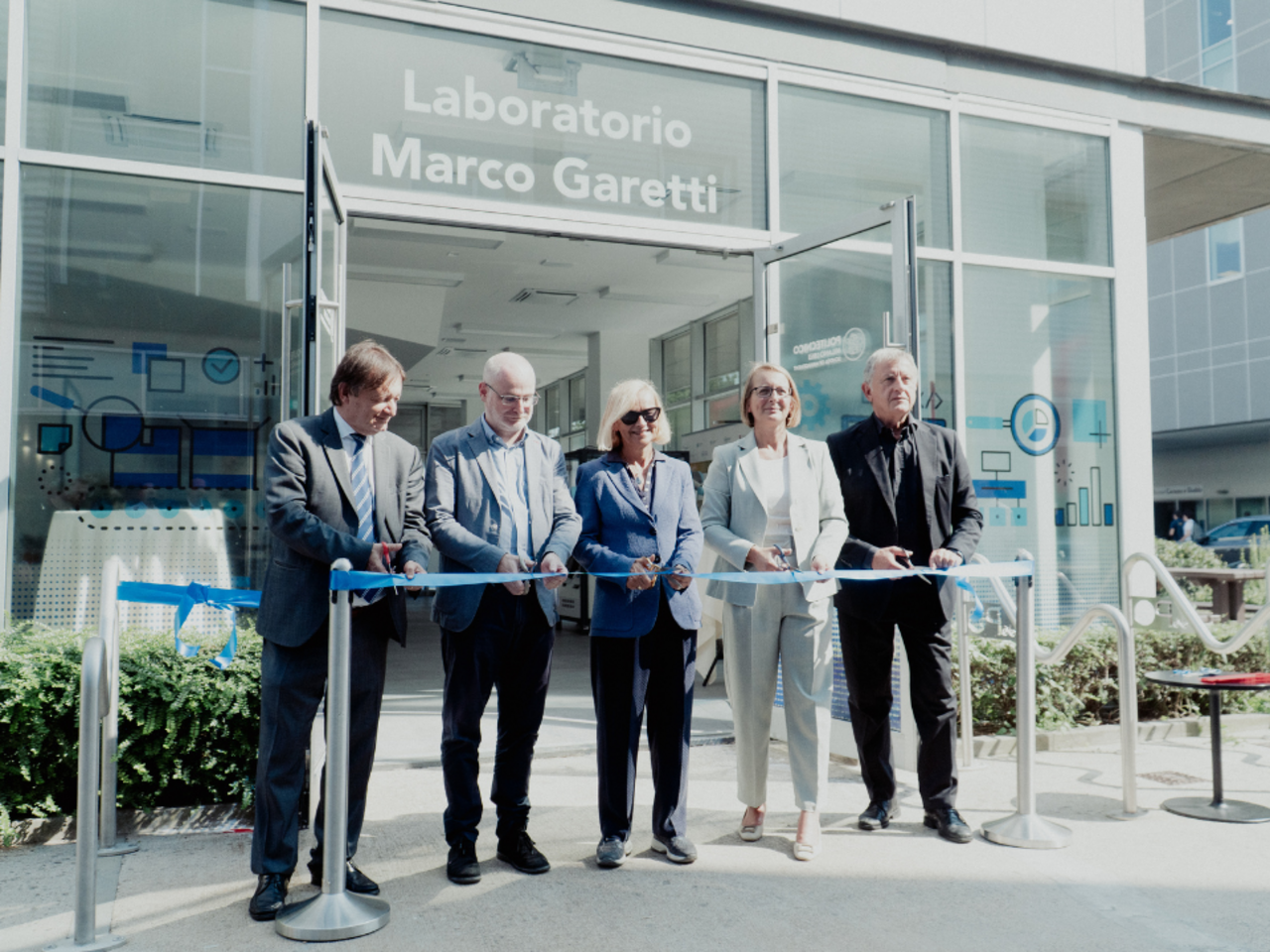
The Marco Garetti Laboratory is now regarded as an asset to the whole Department of Management, Economics and Industrial Engineering. As Prof. Terzi pointed out: “It aims to be a lab for the entire department, a shared platform for pre-competitive research, mainly involving collaborative projects.” The new spaces in the Marco Garetti Laboratory were officially opened in September 2025. The former bar has been fully renovated and well equipped thanks to the HumanTech (MUR) project, with co-financing from the MICS (Made In Italy Circular and Sustainable, Spoke 5) Extended Partnership and contributions from the University, thus implementing a strategic plan for upgrading the infrastructure used for research.
Inside the Lab
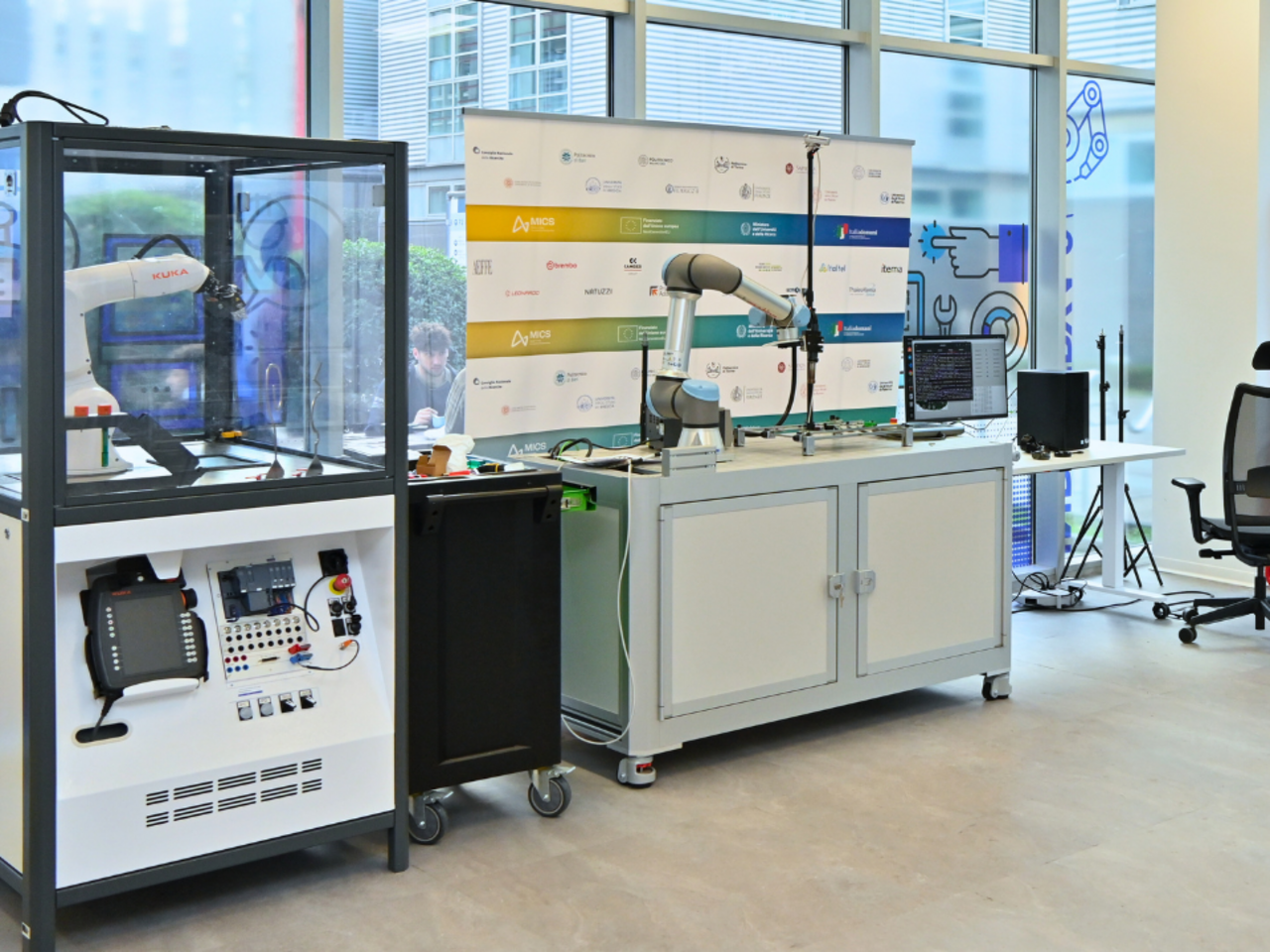
The space is designed to be a modular factory, with various adaptable islands. As Prof. Terzi explained: “It is constructed so as to represent production, assembly, handling and logistics.” Everything is designed to simulate real situations, but without the constraints – and risks – of industrial production. It provides an environment for testing aspects such as maintenance algorithms, energy control, Digital Twins and recognition systems.
But the really novel feature is that one can also observe what happens to people. Wearable sensors, helmets with electrodes and wristbands for monitoring physiological variables help one to evaluate physical fatigue and cognitive and emotional stress. “We’re looking at what’s going on in someone’s head,” said Prof. Terzi simply, putting complex notions into more accessible terms. All this takes place in a controlled setting, before being applied in the factory.
Projects and research
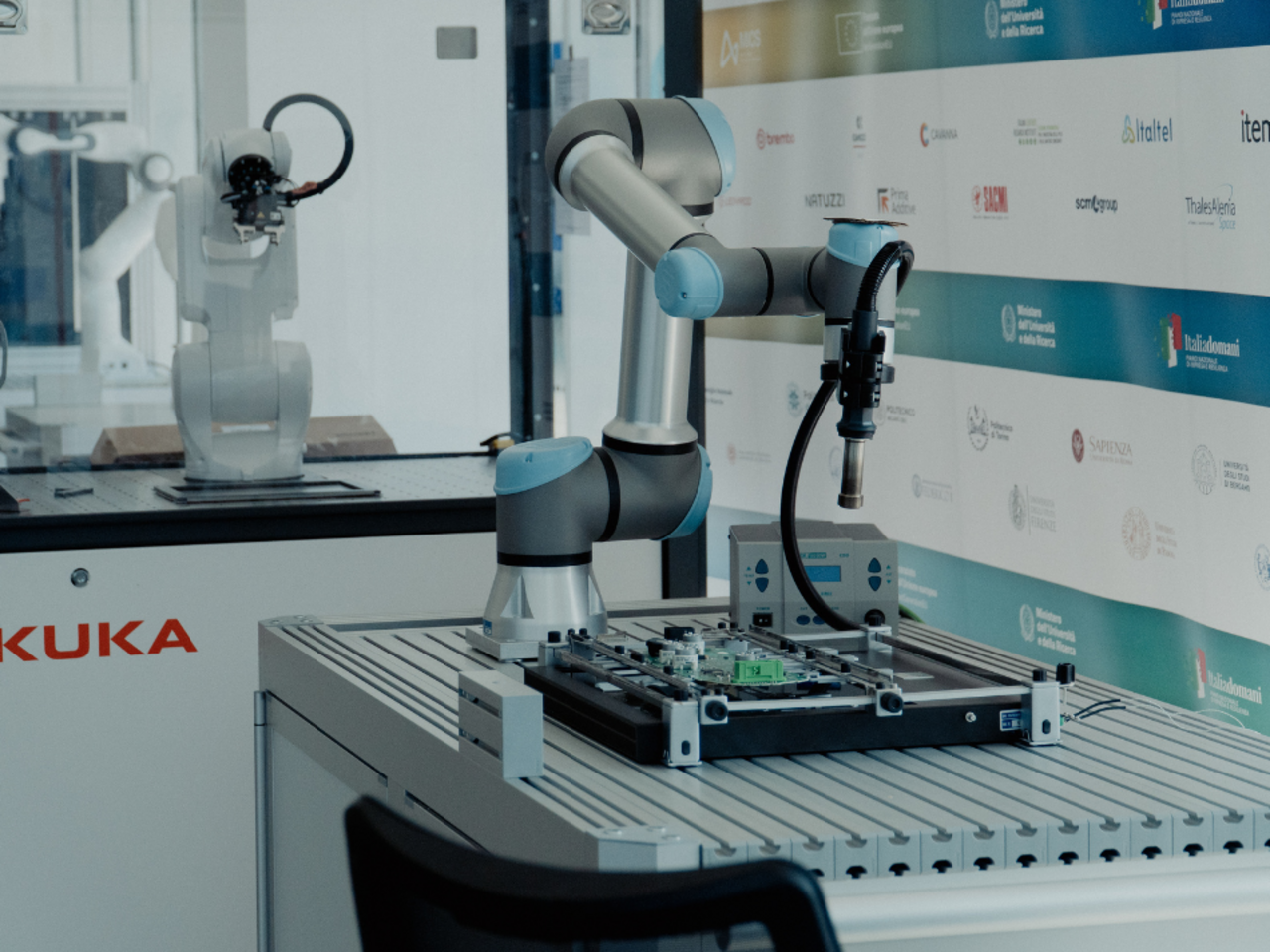
Research in the Marco Garetti Laboratory takes the form of practical experiments, conducted as part of the EU-funded Projects in which the department is involved. These include various experiments that combine the idea of the circular economy with industrial electronics. Walter Quadrini, a member of staff at the Laboratory, explained these projects in more detail, visiting the workstations and consulting the demonstrators. One of the experiments he described concerns the recycling of electronic components, particularly within the automotive sector. In recent years, this work has proved to be important not only in environmental, but also in economic terms. Walter Quadrini explained further, referencing discarded electronic boards and their possible reuse: “An economic advantage has been discovered in relation to the recycling of certain components, where disassembly has proved to be the most critical issue. For many complex components, this process cannot be fully automated and continues to require manual intervention, posing significant risks for operators.” And so they have been experimenting with human-robot collaboration in this context. Walter Quadrini stressed an important point: “When you equip a robot with a desoldering iron heated to over 300 degrees, even if it stops when it touches the operator, that’s already too late.” An awareness of this risk led to the integration of systems of artificial vision, which can anticipate dangerous situations and stop the robot before a risk turns into an accident, clearly demonstrating the role of this Lab as a place for testing and prevention.
Challenges and the future
The Marco Garetti Laboratory is, first and foremost, a facility for research and experimentation. As Prof. Terzi explained: “Up to now, 90% of our work has been financed by European projects.” This is not a third-party lab, and it’s unlikely to become one any time soon. Companies have shown interest, but they remain understandably cautious, especially when it comes to people and their sensitive data. The challenge is twofold: on the one hand, to combine technologies typical of the “medical” world with industrial protocols; on the other hand, to address the ethical issues relative to a study of the human being at work. Every experiment now has to be passed through the Ethics Committee.
Looking ahead, the Lab is part of the European network for Teaching & Learning Factories, a sign of the growing interest in these hybrid environments involving research, training and industry. As Prof. Terzi pointed out: “You can’t afford mistakes in the factory setting.” This is why there are places like the Marco Garetti Lab: protected areas where one can make mistakes, learn from them, and improve.
The Factory of the Future as envisaged here is not only made up of algorithms and robots, but also of people, who are observed, listened to, and protected; the Lab continues to evolve, along a course where industrial progress inevitably moves on from the human being.
Potrebbe interessarti (ultime news in ordine cronologico)

Limitless energy for coin-sized sensors prototyped by MetaVEH project
Devices that sense vibrations in a bridge and transmit the data to monitor its structural stability.

BAMBI: when research meets life
A safe, accessible, and easy-to-use device to counter postpartum haemorrhage.

Rediscovered time, rediscovered neighborhoods: smart working redesigns Milan and Europe
Ilaria Mariotti discusses the new geography of work, including urban scenarios, territorial policies, and new inequalities.

What if the answer to “Are we alone in the universe?” is hidden in a laser?
From laser physics to the search for habitable planets: a forty-year scientific journey. With NIR AstroComb, near-infrared becomes the key to discovering new worlds.

Microgravity, macro questions: COLIS, twenty years of physics from Earth to space
In microgravity, lasers and light analysis allow us to observe how gels and soft materials rearrange themselves over time.